Research Article22 April 2026
Current Issue
Volume 34, Issue 2 (2026)View issue
Featured Content
22 April 2026Thuy Thi Thu Pham, Phuong Thi Can, Nga Thi Thanh Ha
Journal Article22 April 2026Jong-hun Im, Mukyeong Kang, Sang-deuk Lee
Journal Article30 April 2026Cheng-Chieh Chang, Tsuyoshi Sasaki, Ya-Yin Liao, Ling-Ya Hung, Liang-Ting Tsai
Journal Article7 May 2026Chuan-Yang Wan, Hung-Hua Sheu, sheng-Yu Wang, Yao-Ming Wang, Wei-De Chen, Ming-Yuan Lin, Hung-Bin Lee
Current Articles
- Research Article29 April 2026
Dynamic Governance of Transboundary Fisheries through Deep Learning and High-frequency Vessel Tracking Data for Climate-resilient Management: an Application to the East China Sea
Qin Lin, Yaqing Shu, Manel Grifoll, Hongxiang FengTransboundary fisheries governance is increasingly challenged by jurisdictional conflicts, regulatory asymmetries, and climate-induced stock shifts in fish stocks, especially in contested regions like the East China Sea (ECS). This study capitalizes on China’s high-frequency BeiDou Navigation Satellite System (BDS) data (June 2021–May 2022) to pioneer a CNN-BiLSTM deep learning model to dynamically identify fishing hotspots and evaluate policy effectiveness. By integrating vessel trajectories, environmental variables, and regulatory events, we examine spatiotemporal patterns of fishing effort relative to seasonal bans, extreme weather, and quota systems. Key findings reveal: (1) post-moratorium (September–December) concentration of fishing intensity, peaking in November; (2) significant weather-driven suppression of spring fishing activity; (3) persistent trawler hotspots in designated closed zones, highlighting areas in need of heightened regulatory scrutiny; (4) measurable impacts of output-controlled quotas on effort distribution; (5) Behavioral indicators derived from BeiDou data support the evaluation of governance effectiveness, including quota-based management; and (6) Chinese fishing vessels from Zhejiang Province exhibit a generally high level of compliance within the Sino-Japanese and Sino-Korean Provisional Measures Zones (PMZs). This research underscores the value of BeiDou data in enabling real-time, adaptive governance. We propose dynamic zoning and climate-responsive quotas to strengthen ecosystem-based management in transboundary fisheries, calling for integrated satellite monitoring and cross-jurisdictional coordination to enhance climate resilience and sustainable exploitation. - Research Article30 April 2026
Towards Sustainable Marine Education: Assessing High School Students’ Understanding of Conservation Concepts
Cheng-Chieh Chang, Tsuyoshi Sasaki, Ya-Yin Liao, Ling-Ya Hung, Liang-Ting TsaiThis study assesses the concepts of marine resource conservation and sustainability among Taiwanese high school students by developing a Chinese version of the Marine Resources Conservation and Sustainability Scale. Grounded in the cognitive, socio-emotional, and behavioral learning objectives outlined in UNESCO’s Education for Sustainable Development Goals (ESDGs), the scale targets students aged 16 to 18 to examine gender differences in marine knowledge and conservation concepts. The scale comprises 31 items across four dimensions: the first section evaluates marine knowledge, while the remaining dimensions utilize a four-point Likert scale to assess cognitive, socio-emotional, and behavioral learning objectives, respectively. The results indicate that the scale demonstrates strong reliability and validity, with female students outperforming male students in socio-emotional and behavioral learning objectives. This newly developed scale provides a reliable tool for evaluating students' understanding of marine knowledge and conservation concepts, essential for addressing real-world marine environmental challenges. - Research Article28 April 2026
Lock Scheduling Decisions and Strategy Optimization under Operation Interruption Scenarios
Junhe Li, Qiang Zhang, Junpeng Jiang, Jiangchao BaoLocks are critical nodes in inland waterway transportation systems that concentrate vessel traffic between upstream and downstream reaches, making their operations highly sensitive to hydrological conditions. Therefore, disruptions caused by droughts, floods, or routine maintenance can easily trigger congestion. To address this issue, this study systematically examines the interrelationships among the number of ships awaiting passage, scheduling strategies, the trade-off between lock chamber utilization and ship waiting time, the influence of ship entry sequences on user satisfaction, and the combined effects of these factors on overall lock scheduling performance. Based on these analyses, an integrated decision-making model for two-stage ship lock scheduling under interruption scenarios is developed, with the number of lockage plans and average ship waiting time as the objective functions. The resulting optimization problem is solved using a MATLAB-implemented genetic algorithm. The results of the case study demonstrate that, compared with manual scheduling, the proposed approach reduces the average ship waiting time by approximately 0.55 hours, while user satisfaction improves by about 14% relative to the release mode. - Research Article30 April 2026
A Bibliometric and Visualization Analysis of Global Giant Clam Research
Chia-Hsiang Chen, Chih-Hsien ChangIn this study, bibliometric analysis and visualization tools were used to investigate the academic network and knowledge structure surrounding global giant clam research. A total of 551 relevant publications from the Web of Science database, published from 1900 to 2024, were analyzed. The findings indicate that research on giant clams has experienced considerable growth since 2012, peaking in publication output in 2021. Sixty-six countries were represented in the study sample, with the United States, Australia, China, Singapore, and Japan being the most represented ones. Notably, the rate of international collaboration was only 29%, highlighting a need for additional integrated cross-border research efforts. Keyword co-occurrence analysis indicated seven major research clusters, covering core themes such as the giant clam growth and symbiotic mechanisms, classification and diversity, conservation management, and climate change. Furthermore, findings on the authors’ collaboration network revealed a high concentration of research power, with only a few scholars dominating advances in the field. The present study delineates the knowledge structure and cooperation patterns within giant clam research while identifying current shortcomings in regional collaboration, data sharing, and policy connections. Efforts should be made to strengthen cross-sector integration and long-term monitoring systems as well as to deepen local community participation to enhance the scientific conservation and sustainable management of giant clams. This study contributes to the development of marine conservation policies and research strategies. - Research Article7 May 2026
Corrosion Protection Assessment of Offshore Wind Turbine Substructures Using BEASY CP Simulation Analysis
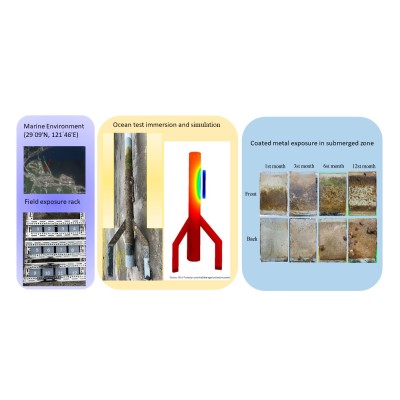
Chuan-Yang Wan, Hung-Hua Sheu, sheng-Yu Wang, Yao-Ming Wang, Wei-De Chen, Ming-Yuan Lin, Hung-Bin LeeThis study investigates the corrosion protection assessment of offshore wind turbine substructures established in the waters off Keelung, Taiwan. First, a cathodic protection system for the monopile foundation is designed and established. The Boundary Element Method (BEM) is applied using the BEASY simulation software to develop a 3D geometric model for cathodic protection. In the steel monopile simulation analysis, the exposed marine environment is set based on the sea conditions of the Keelung small boat marina, including parameters such as salinity, resistance, and polarization curves, to establish an effective cathodic protection system for underwater structures. By simulating these parameters, a better understanding of the corrosion protection performance of the monopile under different environmental conditions can be achieved. Additionally, the polarization curve of the monopile is set to evaluate the variation in corrosion protection potential. The analysis examines the effects of different corrosion polarization potentials of bare steel monopiles, the distance between anodes and cathodes, and the influence of varying numbers of anode. The BEASY simulation results indicate that under different parameter settings, the corrosion protection potential of the bare steel monopile exhibits varying trends. The simulation analysis of the potential distribution for the bare steel monopile ranges from -998 mV to -1056 mV, meeting DNV-RP-B401 criteria for effective protection, confirming the optimal corrosion protection effectiveness. - Research Article27 May 2026
Face-to-Face Versus Distance Education in Competence-Based Maritime Education and Training
Clara Borén, Marcella Castells-Sanabra, Manel GrifollThe COVID-19 pandemic created significant challenges for higher education, with universities being shut down and face-to-face teaching and assessment shifting to an online format. This presented an opportunity to focus on the continuity of learning through distance education, especially in the maritime context, due to the on-board training requirements, and even though five years have passed, this shift has reshaped the education landscape, proving that remote learning has come to stay. At the Barcelona School of Nautical Studies, we have developed a weather routing software in the framework of distance education and teaching innovation. We conducted a teaching trial alternatively at sea (distance education) and onshore (face-to-face education), and results have been compared in terms of competence acquisition in the maritime education and training framework. The focus of this paper is twofold, as it is not only to validate a novel teaching tool for assessing maritime competences but also to ascertain whether there are any significant divergences in competence acquisition regardless of the educational environment
Most Popular Articles
- 22 April 2026Thuy Thi Thu Pham, Phuong Thi Can, Nga Thi Thanh HaEarly detection of shrimp diseases is vital for reducing losses and ensuring sustainable aquaculture. In this study, a novel ontology-driven framework for shrimp disease diagnosis that integrates environmental knowledge with machine learning-based image analysis is proposed. An ontology was constructed from a structured dataset of environmental parameters and farm conditions related to shrimp diseases, which formally represents concepts such as farm characteristics, environmental factors, symptoms, and disease types. Two public shrimp image datasets were subsequently used to train convolutional neural networks (ResNet50 and MobileNetV2) for automated disease classification. The predicted disease labels and confidence scores were mapped onto the ontology. Semantic reasoning rules (SWRL) and SPARQL queries were then combined with image-based predictions and environmental risk factors to generate explainable diagnostic results and tailored management recommendations. The experimental results show that this ontology–ML hybrid approach achieves higher diagnostic accuracy than traditional methods without ontology integration do, thus demonstrating its potential for providing more precise, context-aware, and actionable support for shrimp health management.
- Journal Article22 April 2026Jong-hun Im, Mukyeong Kang, Sang-deuk LeeOwing to increasingly stringent emission regulations imposed by the International Maritime Organization and rising fuel prices, the demand for enhanced energy efficiency and emission control in marine power systems is increasing. This study presents a case study in which the performance of an aging auxiliary generator is restored by modifying the turbocharger nozzle ring. The vessel, a 12-year-old crude-oil tanker, experienced repeated operational issues with its No. 3 generator. This included elevated exhaust gas temperatures, reduced intake air pressure, and frequent turbocharger surges. To address these challenges, the nozzle-ring blade angle was reduced by approximately 2° using spare components, while maintaining the original flow area. Key performance indicators, including exhaust gas temperature, turbocharger rotational speed, intake air pressure, and output stability, were measured under consistent load conditions before and after the modification. The results showed that the exhaust gas temperature dropped to approximately 70 °C, while the turbocharger rotational speed increased by approximately 2,100 rpm, and intake pressure improved from 1.8–2.2 bar. No surging or abnormal vibrations were observed after modification. These findings demonstrate that minor geometric adjustments to the nozzle ring can effectively alleviate performance degradation without the need for full component replacement. Redesigning the nozzle geometry to match combustion flow changes provides a cost-effective and technically feasible maintenance strategy that can prevent power failures and improve energy efficiency. Moreover, this ensures compliance with environmental regulations. This approach has potential applicability to different ship types and engine configurations.
- 29 April 2026Qin Lin, Yaqing Shu, Manel Grifoll, Hongxiang FengTransboundary fisheries governance is increasingly challenged by jurisdictional conflicts, regulatory asymmetries, and climate-induced stock shifts in fish stocks, especially in contested regions like the East China Sea (ECS). This study capitalizes on China’s high-frequency BeiDou Navigation Satellite System (BDS) data (June 2021–May 2022) to pioneer a CNN-BiLSTM deep learning model to dynamically identify fishing hotspots and evaluate policy effectiveness. By integrating vessel trajectories, environmental variables, and regulatory events, we examine spatiotemporal patterns of fishing effort relative to seasonal bans, extreme weather, and quota systems. Key findings reveal: (1) post-moratorium (September–December) concentration of fishing intensity, peaking in November; (2) significant weather-driven suppression of spring fishing activity; (3) persistent trawler hotspots in designated closed zones, highlighting areas in need of heightened regulatory scrutiny; (4) measurable impacts of output-controlled quotas on effort distribution; (5) Behavioral indicators derived from BeiDou data support the evaluation of governance effectiveness, including quota-based management; and (6) Chinese fishing vessels from Zhejiang Province exhibit a generally high level of compliance within the Sino-Japanese and Sino-Korean Provisional Measures Zones (PMZs). This research underscores the value of BeiDou data in enabling real-time, adaptive governance. We propose dynamic zoning and climate-responsive quotas to strengthen ecosystem-based management in transboundary fisheries, calling for integrated satellite monitoring and cross-jurisdictional coordination to enhance climate resilience and sustainable exploitation.
- Journal Article30 April 2026Cheng-Chieh Chang, Tsuyoshi Sasaki, Ya-Yin Liao, Ling-Ya Hung, Liang-Ting TsaiThis study assesses the concepts of marine resource conservation and sustainability among Taiwanese high school students by developing a Chinese version of the Marine Resources Conservation and Sustainability Scale. Grounded in the cognitive, socio-emotional, and behavioral learning objectives outlined in UNESCO’s Education for Sustainable Development Goals (ESDGs), the scale targets students aged 16 to 18 to examine gender differences in marine knowledge and conservation concepts. The scale comprises 31 items across four dimensions: the first section evaluates marine knowledge, while the remaining dimensions utilize a four-point Likert scale to assess cognitive, socio-emotional, and behavioral learning objectives, respectively. The results indicate that the scale demonstrates strong reliability and validity, with female students outperforming male students in socio-emotional and behavioral learning objectives. This newly developed scale provides a reliable tool for evaluating students' understanding of marine knowledge and conservation concepts, essential for addressing real-world marine environmental challenges.
- Journal Article28 April 2026Junhe Li, Qiang Zhang, Junpeng Jiang, Jiangchao BaoLocks are critical nodes in inland waterway transportation systems that concentrate vessel traffic between upstream and downstream reaches, making their operations highly sensitive to hydrological conditions. Therefore, disruptions caused by droughts, floods, or routine maintenance can easily trigger congestion. To address this issue, this study systematically examines the interrelationships among the number of ships awaiting passage, scheduling strategies, the trade-off between lock chamber utilization and ship waiting time, the influence of ship entry sequences on user satisfaction, and the combined effects of these factors on overall lock scheduling performance. Based on these analyses, an integrated decision-making model for two-stage ship lock scheduling under interruption scenarios is developed, with the number of lockage plans and average ship waiting time as the objective functions. The resulting optimization problem is solved using a MATLAB-implemented genetic algorithm. The results of the case study demonstrate that, compared with manual scheduling, the proposed approach reduces the average ship waiting time by approximately 0.55 hours, while user satisfaction improves by about 14% relative to the release mode.
- 30 April 2026Chia-Hsiang Chen, Chih-Hsien ChangIn this study, bibliometric analysis and visualization tools were used to investigate the academic network and knowledge structure surrounding global giant clam research. A total of 551 relevant publications from the Web of Science database, published from 1900 to 2024, were analyzed. The findings indicate that research on giant clams has experienced considerable growth since 2012, peaking in publication output in 2021. Sixty-six countries were represented in the study sample, with the United States, Australia, China, Singapore, and Japan being the most represented ones. Notably, the rate of international collaboration was only 29%, highlighting a need for additional integrated cross-border research efforts. Keyword co-occurrence analysis indicated seven major research clusters, covering core themes such as the giant clam growth and symbiotic mechanisms, classification and diversity, conservation management, and climate change. Furthermore, findings on the authors’ collaboration network revealed a high concentration of research power, with only a few scholars dominating advances in the field. The present study delineates the knowledge structure and cooperation patterns within giant clam research while identifying current shortcomings in regional collaboration, data sharing, and policy connections. Efforts should be made to strengthen cross-sector integration and long-term monitoring systems as well as to deepen local community participation to enhance the scientific conservation and sustainable management of giant clams. This study contributes to the development of marine conservation policies and research strategies.
- Journal Article7 May 2026Chuan-Yang Wan, Hung-Hua Sheu, sheng-Yu Wang, Yao-Ming Wang, Wei-De Chen, Ming-Yuan Lin, Hung-Bin LeeThis study investigates the corrosion protection assessment of offshore wind turbine substructures established in the waters off Keelung, Taiwan. First, a cathodic protection system for the monopile foundation is designed and established. The Boundary Element Method (BEM) is applied using the BEASY simulation software to develop a 3D geometric model for cathodic protection. In the steel monopile simulation analysis, the exposed marine environment is set based on the sea conditions of the Keelung small boat marina, including parameters such as salinity, resistance, and polarization curves, to establish an effective cathodic protection system for underwater structures. By simulating these parameters, a better understanding of the corrosion protection performance of the monopile under different environmental conditions can be achieved. Additionally, the polarization curve of the monopile is set to evaluate the variation in corrosion protection potential. The analysis examines the effects of different corrosion polarization potentials of bare steel monopiles, the distance between anodes and cathodes, and the influence of varying numbers of anode. The BEASY simulation results indicate that under different parameter settings, the corrosion protection potential of the bare steel monopile exhibits varying trends. The simulation analysis of the potential distribution for the bare steel monopile ranges from -998 mV to -1056 mV, meeting DNV-RP-B401 criteria for effective protection, confirming the optimal corrosion protection effectiveness.
- Journal Article27 May 2026Clara Borén, Marcella Castells-Sanabra, Manel GrifollThe COVID-19 pandemic created significant challenges for higher education, with universities being shut down and face-to-face teaching and assessment shifting to an online format. This presented an opportunity to focus on the continuity of learning through distance education, especially in the maritime context, due to the on-board training requirements, and even though five years have passed, this shift has reshaped the education landscape, proving that remote learning has come to stay. At the Barcelona School of Nautical Studies, we have developed a weather routing software in the framework of distance education and teaching innovation. We conducted a teaching trial alternatively at sea (distance education) and onshore (face-to-face education), and results have been compared in terms of competence acquisition in the maritime education and training framework. The focus of this paper is twofold, as it is not only to validate a novel teaching tool for assessing maritime competences but also to ascertain whether there are any significant divergences in competence acquisition regardless of the educational environment